
RUWES Stakeholders Forum
The Rural Stakeholders Forum held on the 13th November 2014 at the National Universities Commission (NUC), Abuja. The forum, which had in attendance RUWES Advisory Board Chair, the Minister of Environment and the outgoing Permanent Secretary, was the first since the inauguration of RUWES on 10th December 2013. The focus of the workshop was to introduce RUWES to new partners; largely women drawn from the paramilitary agencies and faith based organisations. Also in attendance were development partners from Heinrich Boll Foundation, the Nigerian Infrastructure Advisory Facility, United Nations Development Programme, Winrock International. There was an exhibition and demonstration of clean energy technologies by private manufacturers and distributors such as All-Go clean fuel makers of ethanol fuel and stoves, Integra Renewable Energy Services, Roshan Global Services Limited manufacturer of Happy Energy Saving stoves and Solar force. The presence of new and existing cookstove and lighting energy producers and marketers was to allow for interactions with the end user to address issues of quality control while taking into consideration preference of users. This would ensure that the best quality clean energy products are offered to them through the RUWES Initiative. This is necessary to sustain interest, use of products, minimise complaints and thus increase the credibility of the initiative all of which are required to expand the impact of RUWES.
National Launch of the RUWES Initiative
The National Launch of the RUWES Initiative held on the 10th of December, 2013 at the NICON Luxury Hotel, Abuja. The event was chaired by the Minister of Environment, Architect Darius Ishaku. The Honourable Minister highlighted the importance of energy in every sphere of life stating that energy which is important in meeting our most basic needs of cooking, heating and lighting has been largely ignored. The Minister said that evidence suggests that widespread deployment of clean cookstoves and solar lighting systems under the RUWES Initiative with energy and combustion efficiency which are improvements over traditional dirty fuel sources could also potentially help mitigate adverse effects on human health, energy poverty, time, income savings and climate consequences. The RUWES State Coordinators, individuals from FBOs, NGOs and CBOs who are the fore-runners of the RUWES Initiative in their respective states were decorated by the Honourable Minister of Environment, the Resident Coordinator UNDP, Mr. Daouda Toure and the members of the RUWES Advisory Board. Each State Coordinator received a RUWES branded Tricycle for ease of marketing their products. The contents of the tricycle included clean energy, numerous technologies for cooking, lighting and solar barbing kits. The women were enjoined to be diligent and steadfast in the sale of the products and reminded that beyond business; they are advocates for change and are expected to preach to their fellow women to change their energy practices.
The Rural Energy Access Project (REAP)

The Rural Energy Access Project is the lighting and heating component of RUWES developed to bring affordable energy solutions to the underserved and underprivileged rural dwellers. The average rural inhabitant has no access to electricity or electric solutions to improve the quality of life. They rely mostly on sunlight during the day and kerosene lamps or candles at night, these impact very negatively on health by exposing them to black carbon and PM2.5 and economic disadvantage, leaving them in a constant vicious never-ending cycle. The REAP employs the vehicle of small renewable energy appliances which provide lighting and mini electric solutions to the most energy poor in the Nation. These appliances include but are not limited to Solar lighting kits, solar barbering kits, solar sewing machines and more. The REAP aims to use the earth’s abundant natural resources to positively affect the lives of the rural poor. REAP is proposing a reduction in our National emission factor (by using clean, energy efficient LED bulbs) and introducing Household Stand-Alone Solar kits (pay-as-you-go inclusive) to replace incandescent bulbs, single-wick kerosene and Oil wicks/lanterns and small generators in rural areas. This will consist of a television set (19”, 21”, 28” or 32”), a fan, a mobile phone charging port and 2-4 LED bulbs. The goal of the project is to ensure affordable and sustainable clean energy access to the rural poor and reduce black carbon emissions by; Phasing out single-wick kerosene lighting and oil lamps through the introduction of small off-grid lighting systems that use light emitting diodes (LEDs). Provision of Household Stand Alone Solar Solutions (solar lights, barbing kits, grinding machines etc) Lead the rest of Africa on the kerosene lantern phase-out in schools by 2020 Provide clean and healthy alternatives for heating during harmattan in Northern States to replace firewood and charcoal. Introducing Household Solar Lighting and Entertainment systems of different price ranges for off-grid communities. The success of the REAP is best exemplified by the installation of solar home systems to 600 households in Mutum Biu, Gassol LGA of Taraba State. The provision of the solar home systems to the off-grid LGA instantly reduced crime rate, improved and extended commer. Photos SOLAR-LAMPS-INSTALLATION CHILDREN-USING-SOLAR-LAMP – Copy Load More End of Content.
RUWES Awareness Drive
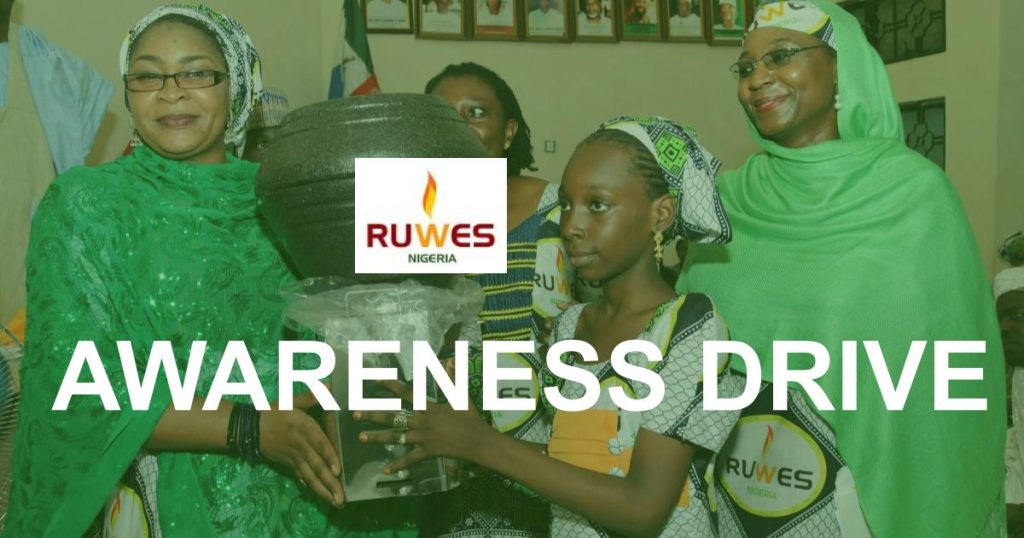
RUWES intends to raise awareness about the connection between health, poverty and fuel sources, and to organise and galvanise rural women to demand for sustainable alternatives that will provide a lasting solution to the problem. In our efforts to create awareness on the health, financial, and environmental benefits for clean energy and advocate for a shift to cleaner energy practices, the RUWES Initiative has carried out several awareness visits to different churches in the Federal Capital Territory, these include the Good Tidings Church, the Christian Reformed Church of Nigeria (CRCN) and the Redeemed Christian Church of God, Nigeria (RCCG). The RUWES initiative was also present at the U.S Embassy’s Eco Week. During these visits, the RUWES team gives lectures and demonstrations on the latest clean energy technologies, and has successfully reached and registered a vast number of its target audience; the female members who comprise the major percentage of victims of indoor air pollution emanating from traditional fuel use.
The National Clean Cooking Scheme (NCCS)
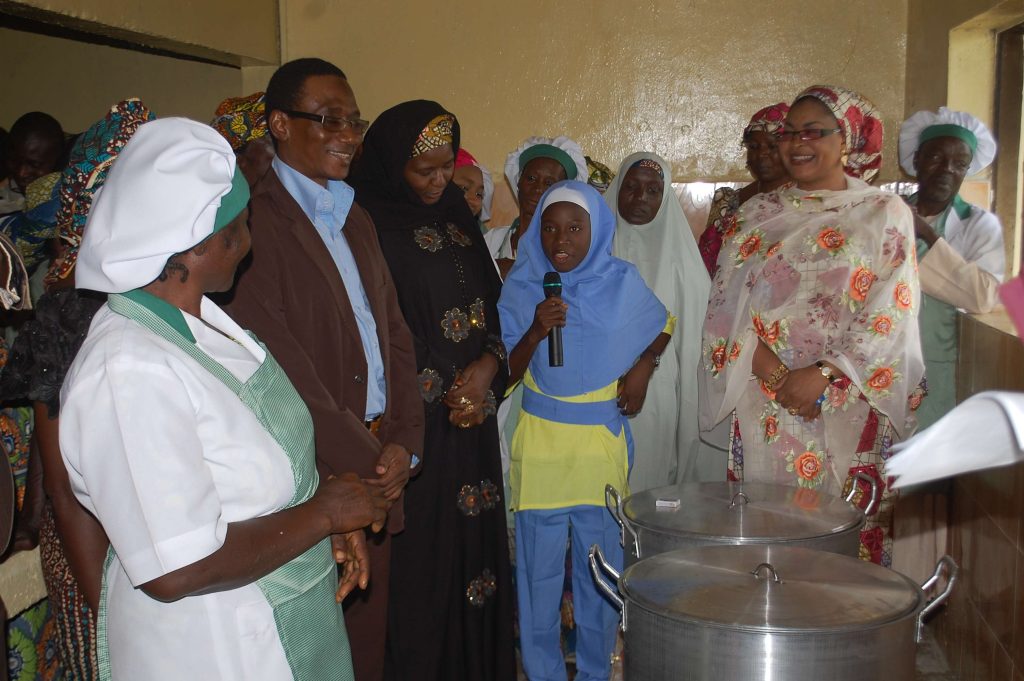
The National Clean Cooking Scheme is the cooking component of the RUWES. It seeks to address the need for clean cooking technologies. It is also an ongoing initiative, which is implemented in different states and rural communities of the nation according to available resources, in conjunction with our development partners. It seeks to address the need for clean cooking technologies. The need for a shift in our prevalent cooking methods is very evident as deforestation and desertification loom larger daily. This menace is occasioned primarily by tree felling for cooking and heating purposes. The number of trees felled for use as fuel wood is far in excess of wood for furniture and other industrial uses. Kerosene which is a national alternative to firewood is usually scare, very difficult to source and detrimental to health. The success of this scheme can also be exemplified through the RUWES retrofitting of four (4) boarding secondary schools in Kaduna State, who heavily depended solely on the use of wood fuel for cooking. This was achieved by the intervention funding from the United Nations Development Program (UNDP), through the African Adaptation Programme (ADP). The retrofit involved switching the kitchens from firewood to fully automated LPG use in furtherance of this scheme. The beneficiary schools are as follows: Federal Government Girls’ College, Zaria. Government Girls’ Secondary School, Kawo. Government Secondary School, Fadan Kaje. Government Secondary School, Kwoi. We hope to replicate this project in various schools and related institutions in various states across the Federation. Also, RUWES, through UNDP intervention fund, has provided industrial cookstoves for women clusters for agricultural value addition. These kinds of projects are intended to be replicated in various communities, boarding schools and related institutions in different states across the federation. Befor and After Photos of Project BeforeAfter BeforeAfter More Photos DSC_7930_compressed DSC_7934_compressed BEFORE-RETROFITTING-5_compressed Load More End of Content.