
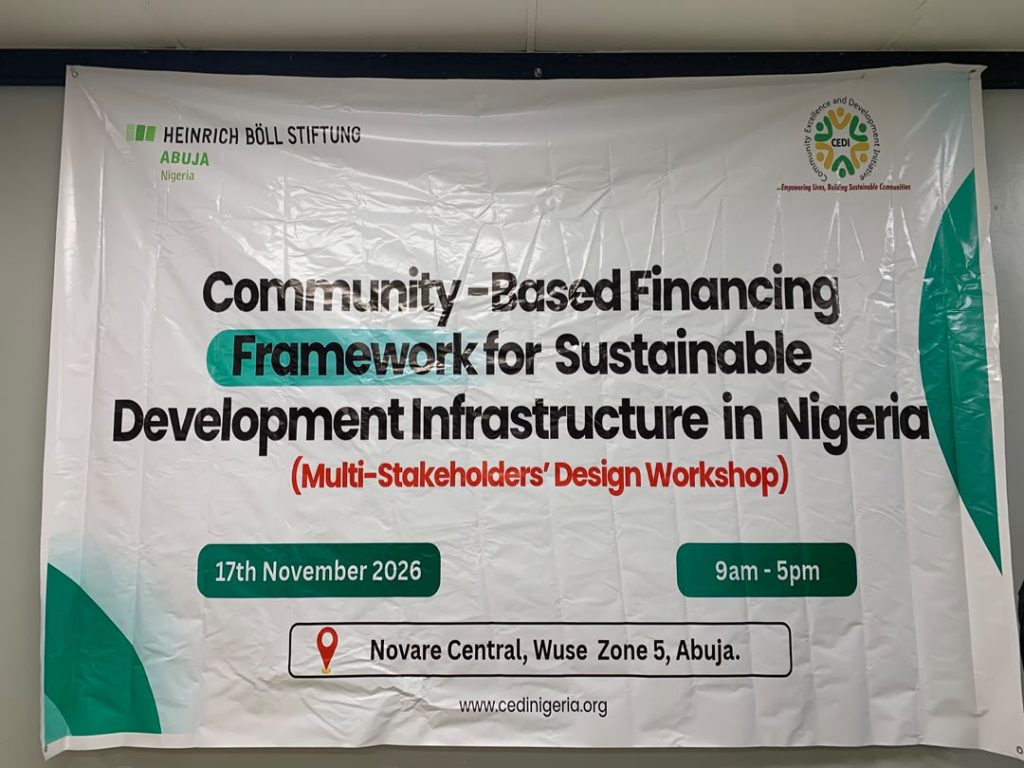
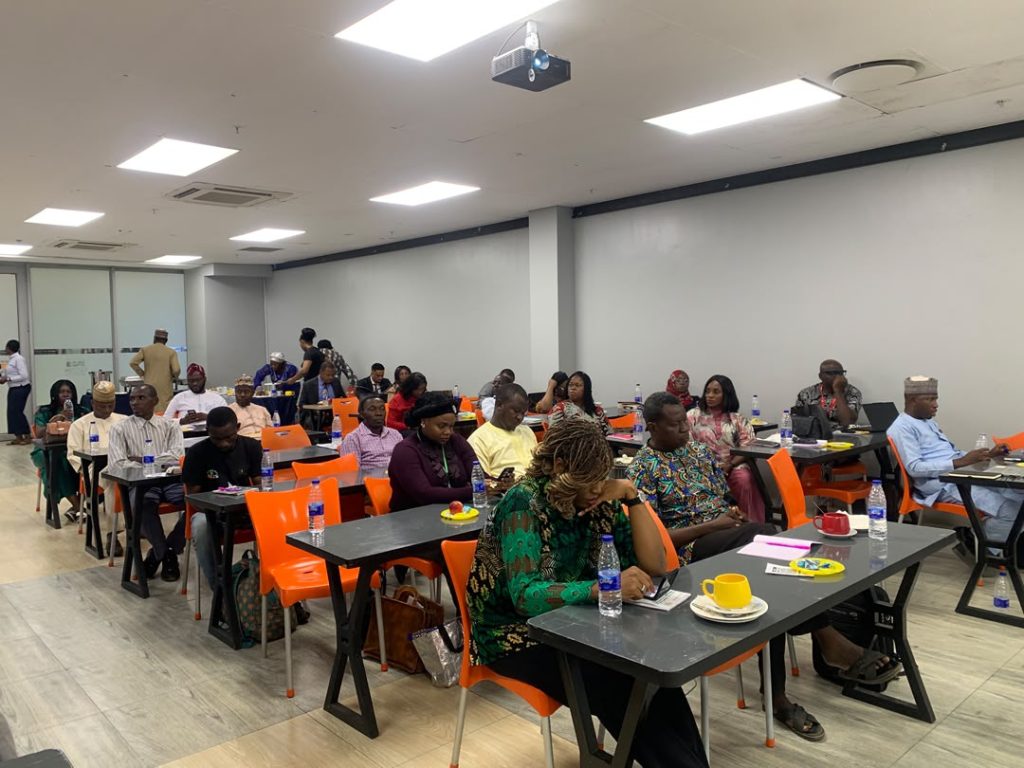
Rural Women Energy Security Initiative Nigeria (RUWES) participated in the one-day Multi-Stakeholders’ Design Workshop on the Community-Based Financing Framework for Sustainable Development Infrastructure in Nigeria, held on Tuesday, 17 November 2026, at Novare Central, Wuse Zone 5, Abuja. The workshop was organised by the Community Excellence and Development Initiative (CEDI) with Heinrich Böll Stiftung Abuja, and brought together government institutions, community organisations, civil society, development partners and other stakeholders.
The Executive Director of CEDI, Osamede Precious Onuvae, delivered the welcome address. She welcomed participants to the workshop and acknowledged their presence and participation in the discussions. A keynote address was delivered by Ikenna Donald-Ofoegbu, Programme Manager of the Sustainable Nigeria Programme at Heinrich Böll Stiftung.
Across Nigeria, communities have long funded and built public infrastructure through cooperatives, town unions, age-grade associations, savings schemes, levies, donations and diaspora support, delivering roads, schools, health centres, water facilities and electricity infrastructure. Yet these efforts are rarely recognised in national planning and financing, and communities often pay for infrastructure that is government’s responsibility, with no reimbursement or incentive. The framework is meant to close that gap by setting out clear institutional, policy and financing arrangements for communities and government to work together.
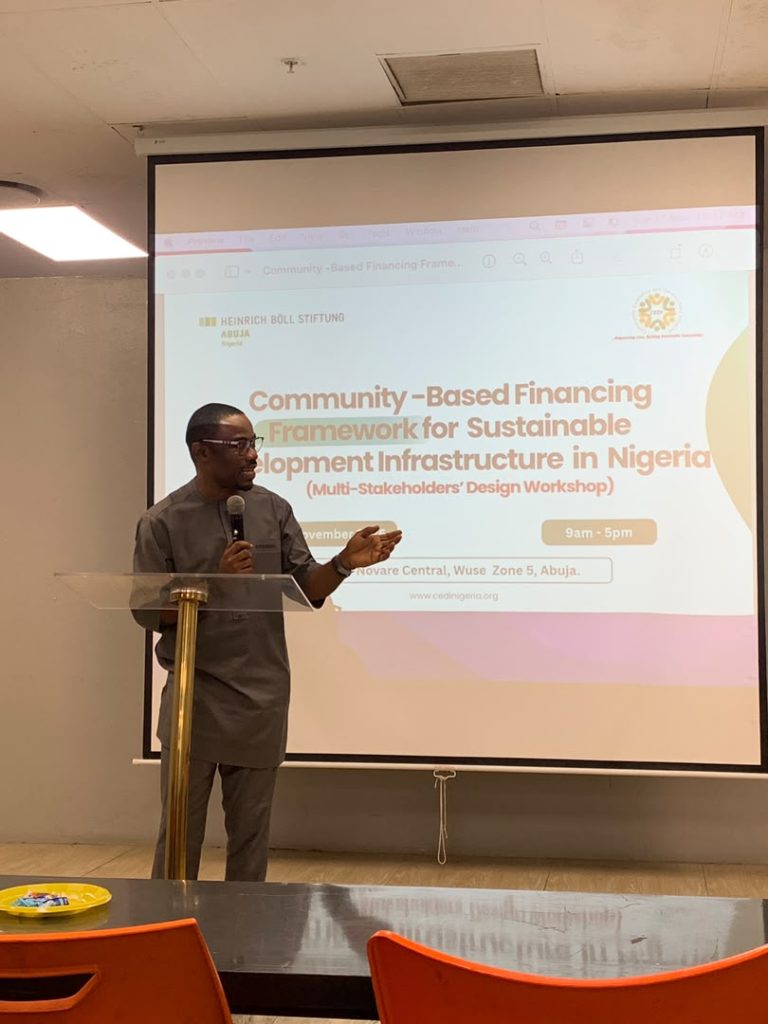
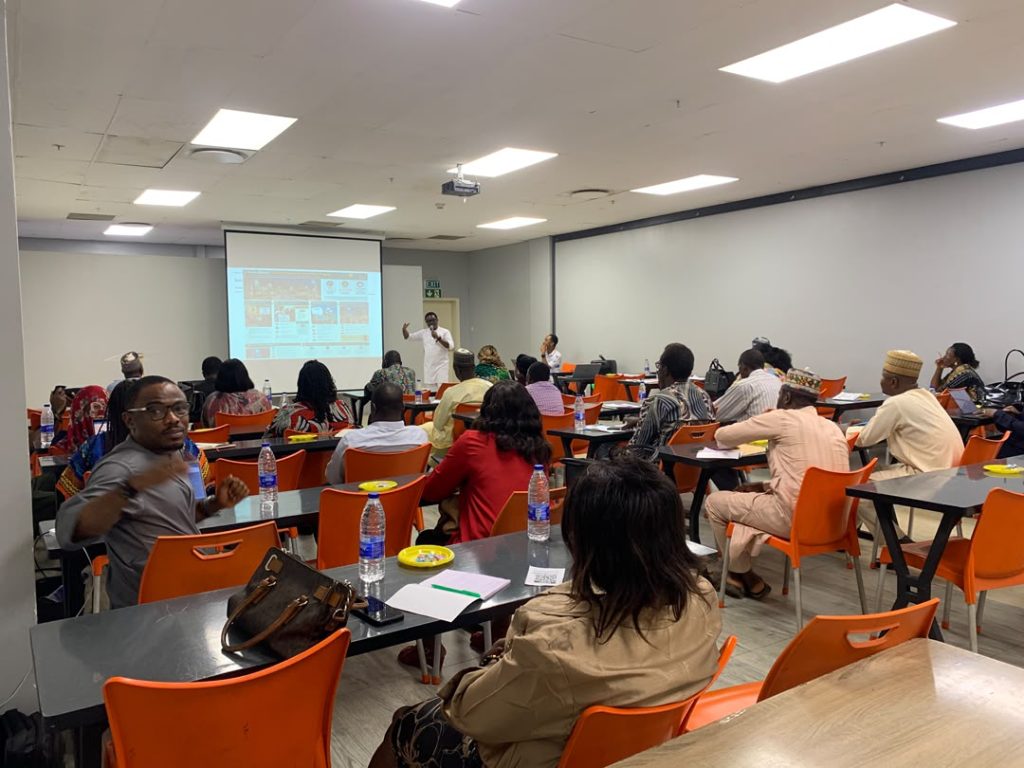
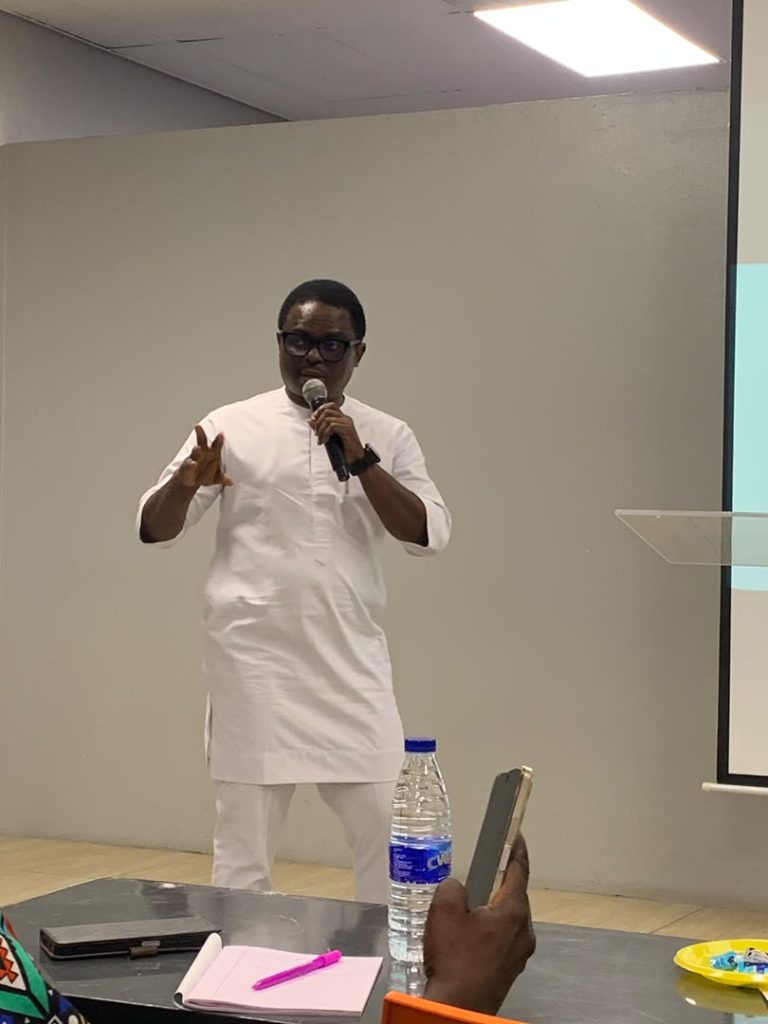
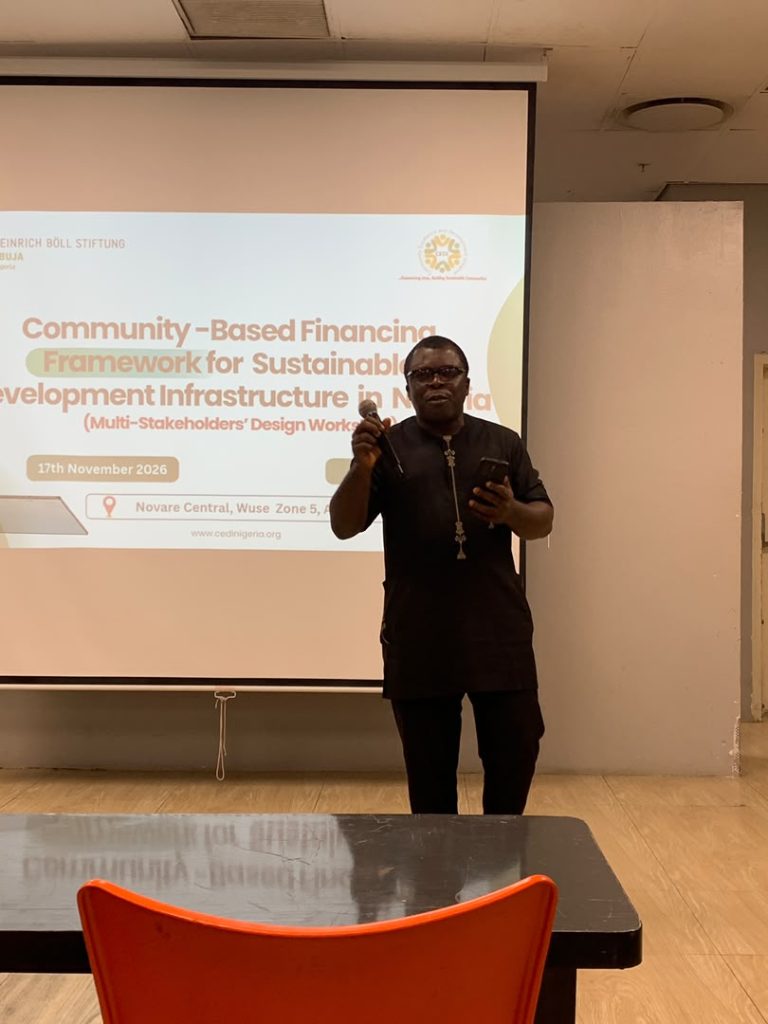
The Lead Consultant, Unico-Iregbu Kalu Uduka, presented findings from a baseline assessment and case studies of community financing models in nine states. The research showed that communities already mobilise money, land, labour, materials and leadership for development, but that community institutions are not formally recognised, projects are poorly coordinated with government programmes, technical support and access to finance are limited, and accountability systems are weak. Participants stressed that the framework must build on existing community structures and must not shift government’s responsibilities onto communities. The Project Manager, Okechukwu Ugwu, led the discussions that followed.
In four breakout groups, participants reviewed the proposed outline of the framework and made recommendations. They called for existing community institutions to be recognised and strengthened rather than replaced, and for deliberate representation of women, young people, persons with disabilities and other vulnerable groups, including financing and accountability arrangements for women-led initiatives. They proposed flexible access to finance through reimbursement, matching grants and performance grants, with cash and non-cash contributions such as land and labour both counted, and with poor, vulnerable and conflict-affected communities not shut out for lack of cash.
Participants also recommended that incentives reward project quality and impact rather than the amount of money contributed, and that public funds be protected through dedicated community accounts with at least three signatories, regular reporting, open procurement and community oversight. Other recommendations were accessible complaint and grievance mechanisms, safeguards for vulnerable groups, and a phased pilot across the six geopolitical zones, starting with communities that already have functional structures and aligned with existing government programmes.
The emphasis on women’s inclusion and on fair access to finance for communities with limited resources is in line with RUWES’s work to promote the energy security of rural women.